2050 is currently out to literary agents — a hopeful, nerve-shredding stage all writers know well.
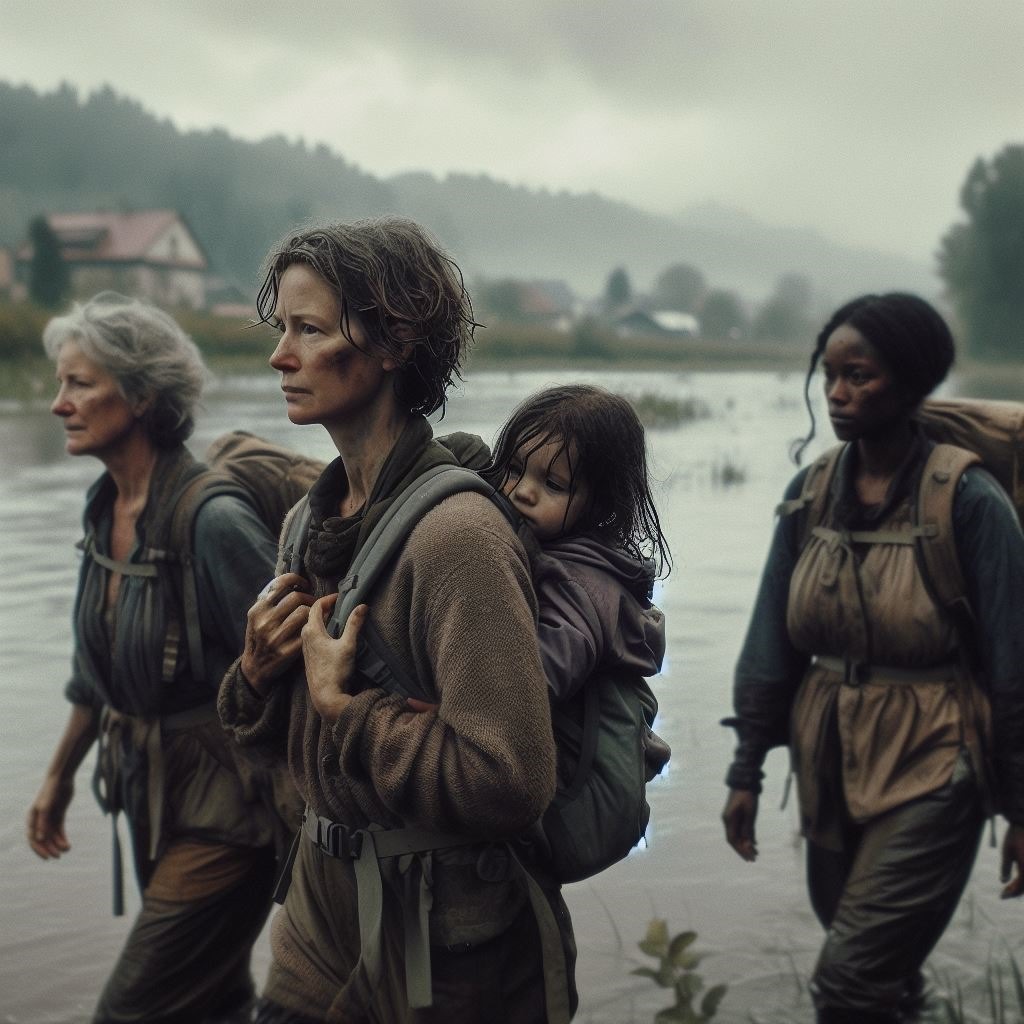
2050 is the year my daughter will be the same age I am now, an odd mirror to look into as I imagine a world only one technological leap ahead of our own. The novel grew from that reckoning: what it means to move through a near-future shaped not by catastrophe, but by the slow accumulation of climate strain, digital dependence, migration, borders that redraw themselves without warning, and identities that can collapse with a single software update.
I wrote it for the future my daughter and millions of others of all ages will inherit, and for the present we are already shaping. At its heart, 2050 follows Jana, a young Virtual Reality illustrator, and her two sixty-something mothers, Helen and Isha, whose lives fall apart in a single morning when a new border-security algorithm is rolled out. Overnight, the system reclassifies their data, flags their identities as “non-verified,” and erases their legal status.
In the space left by that erasure, before anyone can appeal or even understand what has happened, their world contracts to the size of a backpack and a toddler they must protect as they cross a fractured continent on foot. The image here captures the spirit of the book: three generations moving through a landscape they no longer recognise, caught between what was promised and what remains.
2050 resists the label of dystopia. At its heart, it is a story of resilience and of the small, stubborn acts of care that keep people alive long after systems have failed them.
Some Excerpts to give you a sense of my writing style and the worlds I build in 2050.
He was standing in front of the security camera, looking straight through the lens as if he could see me on the other side. His eyes, tinted emerald by the screen’s reflection, locked on mine. I could have left him there. No one in their right mind opens the door to a migrant who might be dangerous or diseased. It was against the law to help them. But I remembered what Helen had written in her message. “Nothing is the same anymore,” I whispered to Ayo, then opened the door.
For a moment, I thought it was a hoax—another wave of digital theatre. But Xiris was already translating the feed. FEMTO had infiltrated the pipeline’s core system and planted ransomware that would disable its essential functions until their demands were met.
Then the message scrolled through my Vision: “Even Entrepreneurs can die before their time.”
Two days later, the pipeline closed at source. People called it terrorism, justice, environmental activism, or the beginning of collapse, depending on who they were and what they feared losing. For me, it was the first sign that the world was shifting faster than any of us could keep up with.
When you grow up with someone, a mother or father or anyone who forms you, you learn to see through their eyes. Helen was my lens, and losing her means I have to realign my sight. No more birthdays. No more waking to her voice asking, What time do you call this? No more bracing myself for her reaction to something careless I’d said.